Emmanuel Episcopal Church
“It is not sufficient to see and to know the beauty of a work. We must feel and be affected by it.”
Voltaire
The inspiration for each and every artist creation is unique, and each specific architectural design approach gives rise to a distinct experience for its occupants. The architecture of Emmanuel Episcopal Church features a masterful plan and inspiring details that have the ability to move those who enter and lift them into a spiritual realm.
The inviting entrance contains a variety of adjacent spaces that contribute to a complete church experience, including a weekday chapel in the style of St. Francis of Assisi, practice spaces available to the music ministry, and specially crafted religious education classrooms to support the Catechesis of the Good Shepherd faith formation program for children. The central columbarium, labyrinth walkway, and gathering space with vaulted ceilings round out the spatial offerings of the church’s entrance.
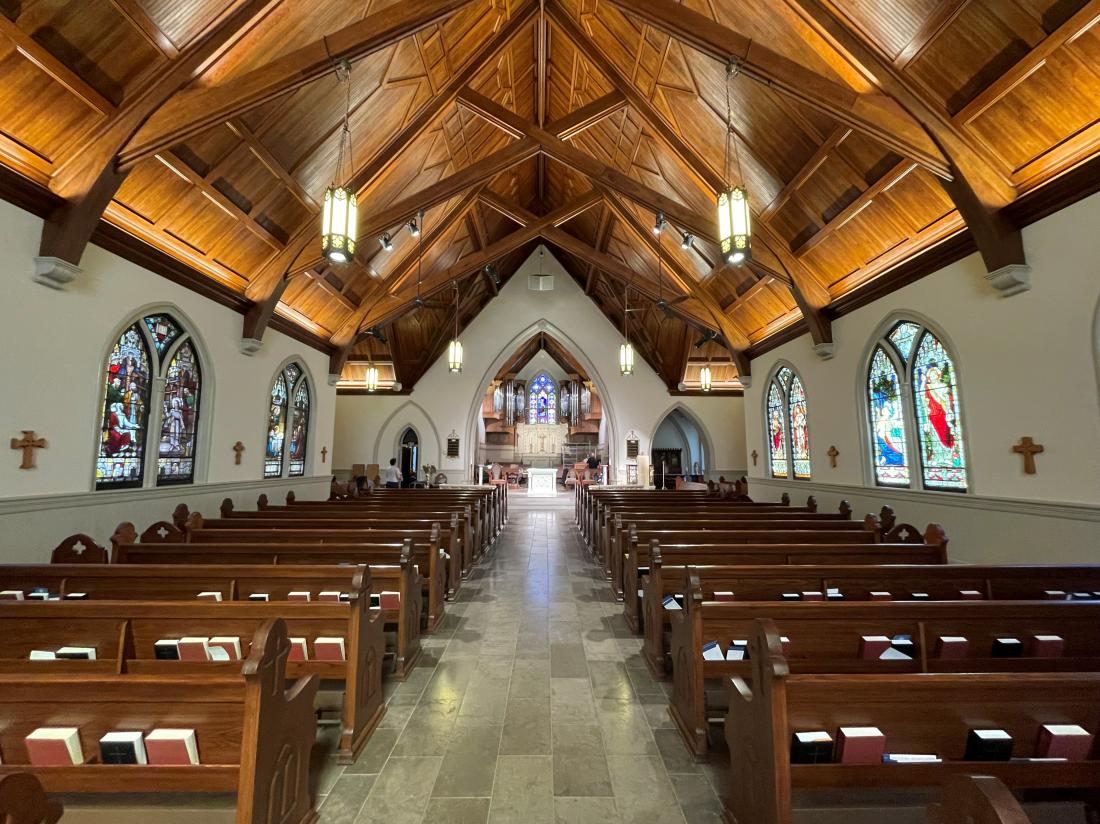
Upon entering the sanctuary space itself, a blend of traditional and contemporary, old and new, awaits. The deft use of a mixture of oak and fine stone surfaces creates a warm and inspirational environment in which to worship through liturgy and music. In this space, the organist is able to exist in the moment and breathe, ready and empowered to create beauty through music.
Our longtime colleague, Reverend Robert Salamone, served as rector of Emmanuel for some 10 years. He guided the overall renovation plan of the building complex, completing project after project, shepherding his flock to a truly rewarding church experience.
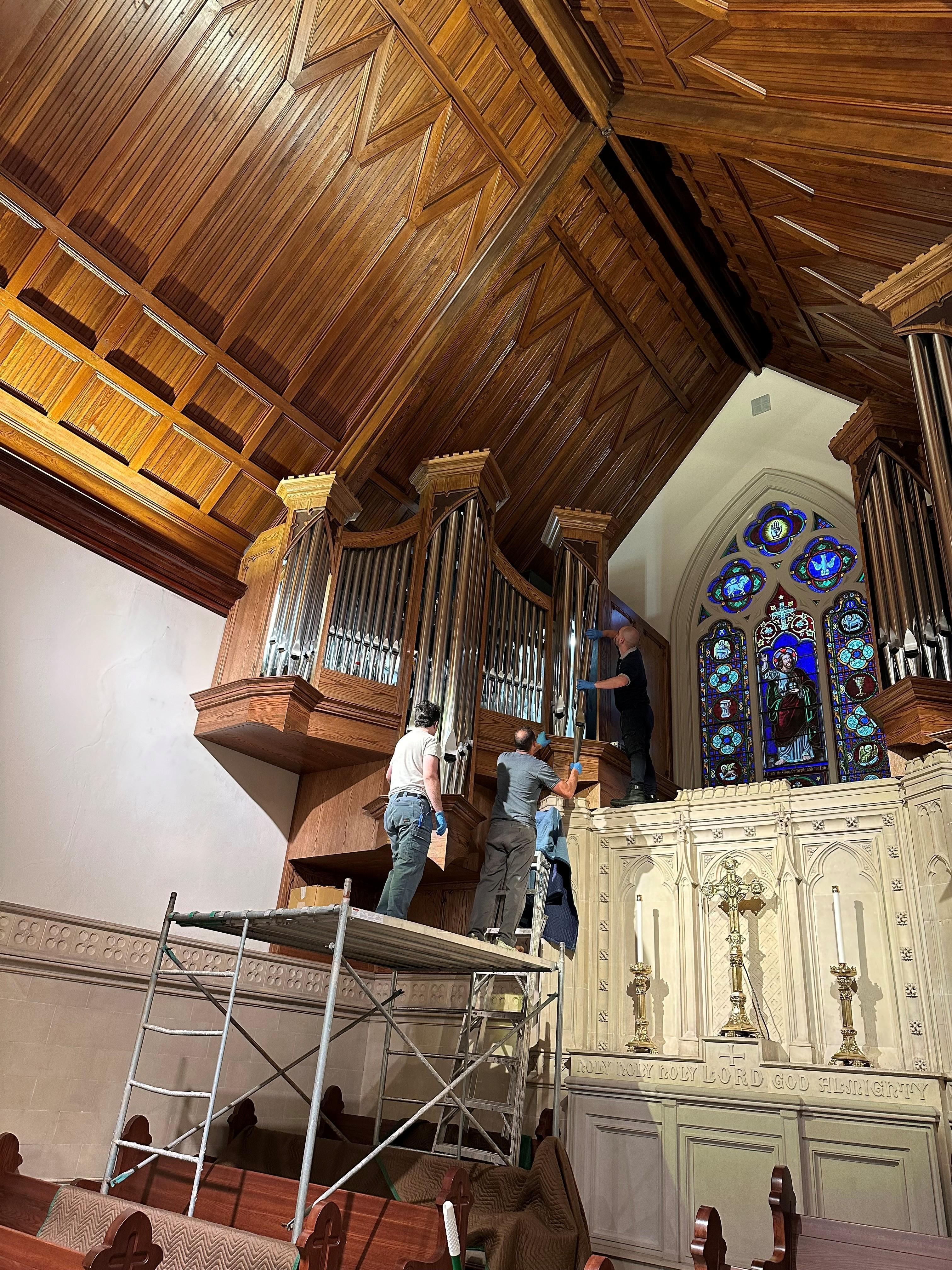
Finally, it was time to address the building of the pipe organ. The music program at Emmanuel benefits from an abundance of talent in the college town of Athens (not to mention, their pretty good football team), as this is the home of the University of Georgia. Peragallo Organ Company was tasked with creating an instrument that would thoroughly support the music program at the parish level and serve as a vehicle to provide for the larger college musical community. Beyond those important requirements, the organ pipework and cases needed to complement the architectural beauty of the room, while simultaneously feeling as though they had always existed.
The Peragallo design team has long been a proponent of gorgeous casework. Frank Peragallo’s years of woodworking wisdom, coupled with John IV’s youthful architectural creativity, integrate as multiple generations work together to create these unique masterpieces. Gleaning details from elements within the sanctuary and seamlessly incorporating them into a finished design is second nature.
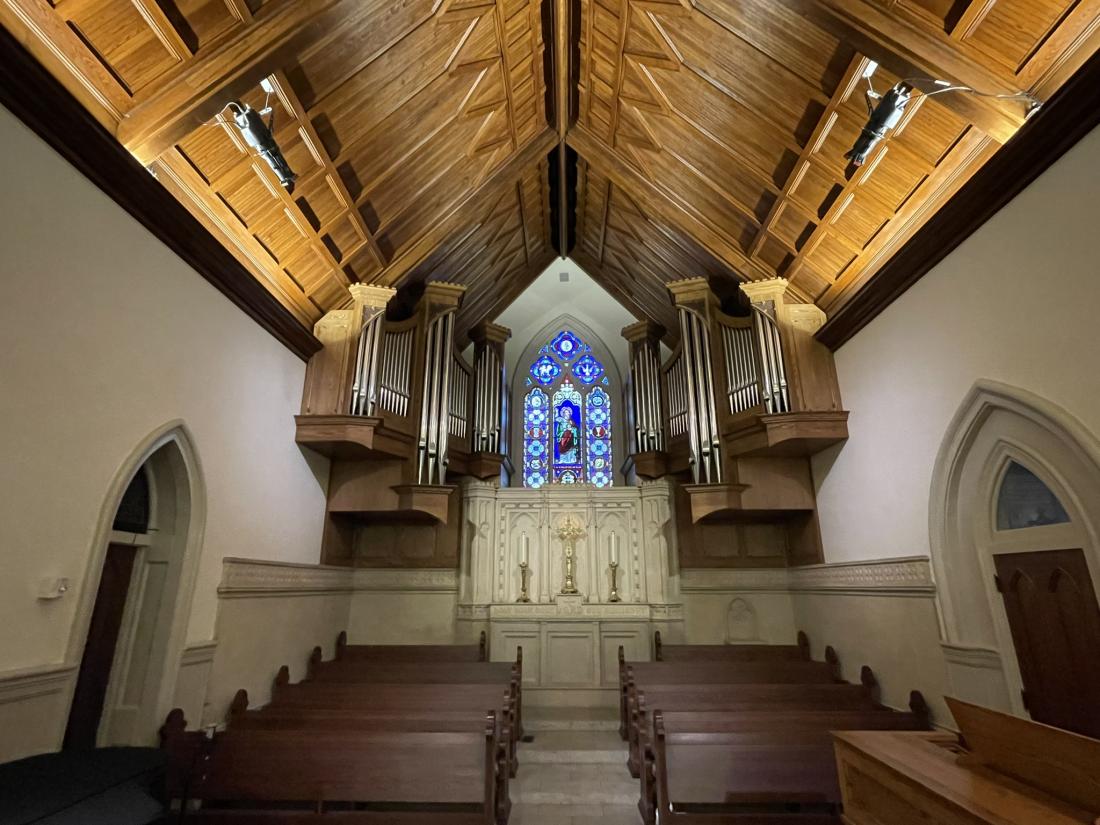
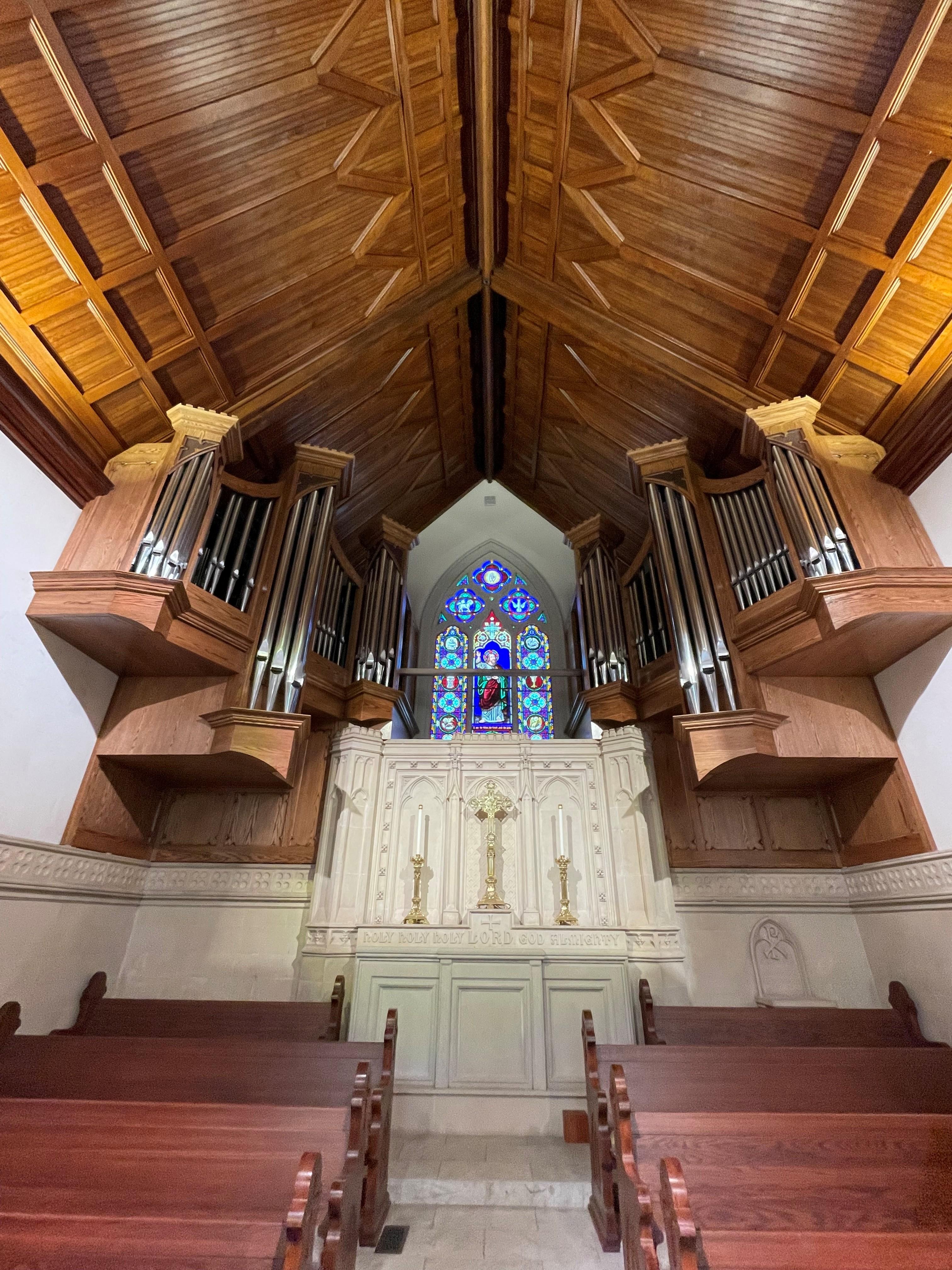
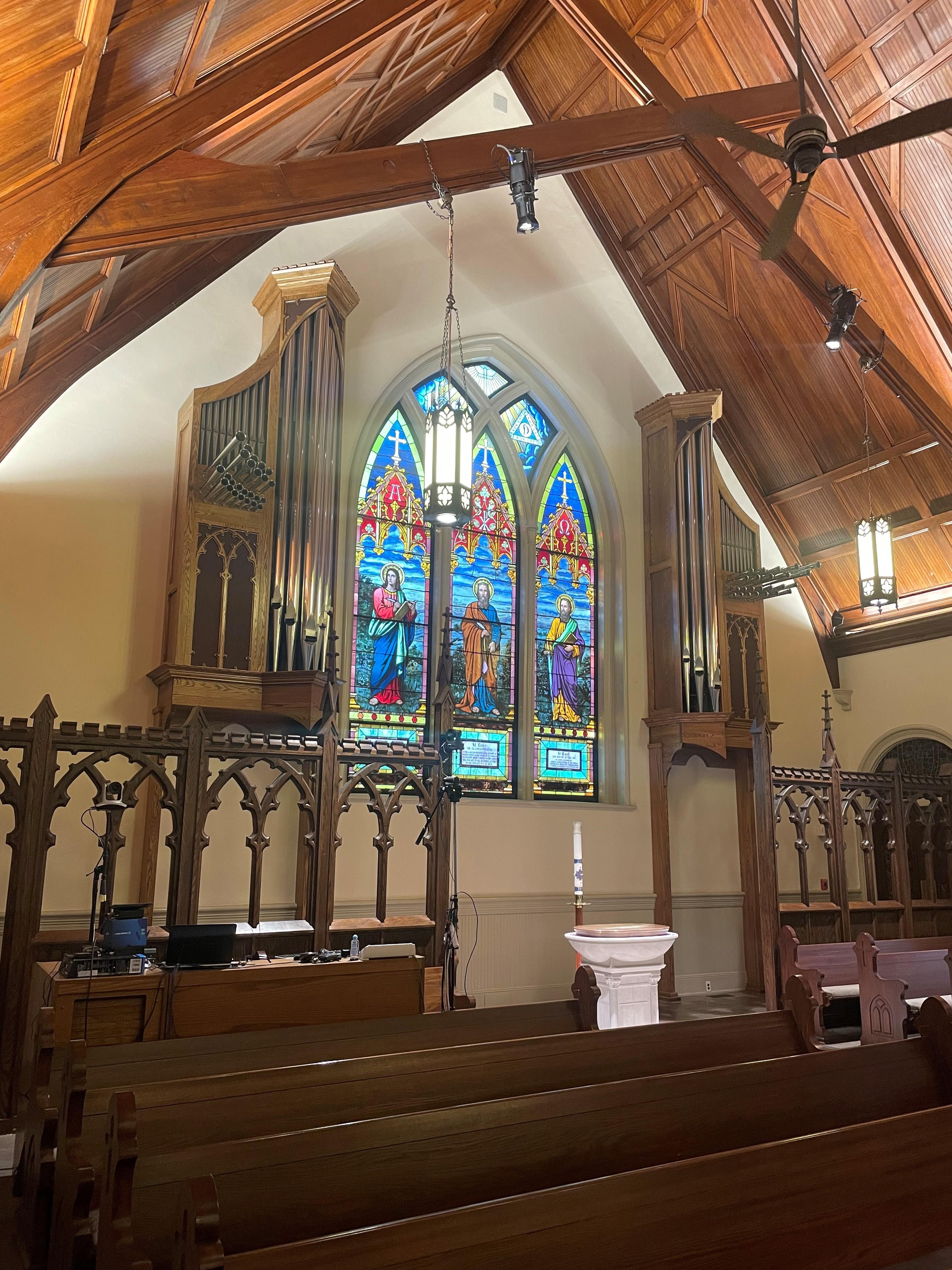
The handcrafted twin chancel caseworks on either side of the high altar employ cantilevered construction to allow for the inclusion of a generous number of organ pipes in the limited available floor space. The placement of the divisions of pipework within the room allows for a balanced volume of sound throughout the space. The cases are designed to project the tone of the chancel divisions high above the heads of the choir, while the lower case panels create a concert shell for the projection of the choral voices. The presence of the choir singers on the floor of this forward space was an important consideration in the tonal finishing process. Careful decisions by John Peragallo III and Anthony Peragallo in the final voicing of the pipework produced comfortable, well-rounded tonal choruses.
The four chancel divisions, the unenclosed Great and Pedal and the expressive Swell and Choir, provide the basis of both choral accompaniment and hymn singing. Placing full, expressive divisions behind the choir allows for the creation of truly effective and exciting choral literature.
The Resonance division is located in twin gallery caseworks high on the rear wall of the nave, giving the organist plenty of options to warmly envelop the congregants during hymn singing. Finally, the floating Celestial division cascades sound down from on high with yet another balanced Principal chorus.
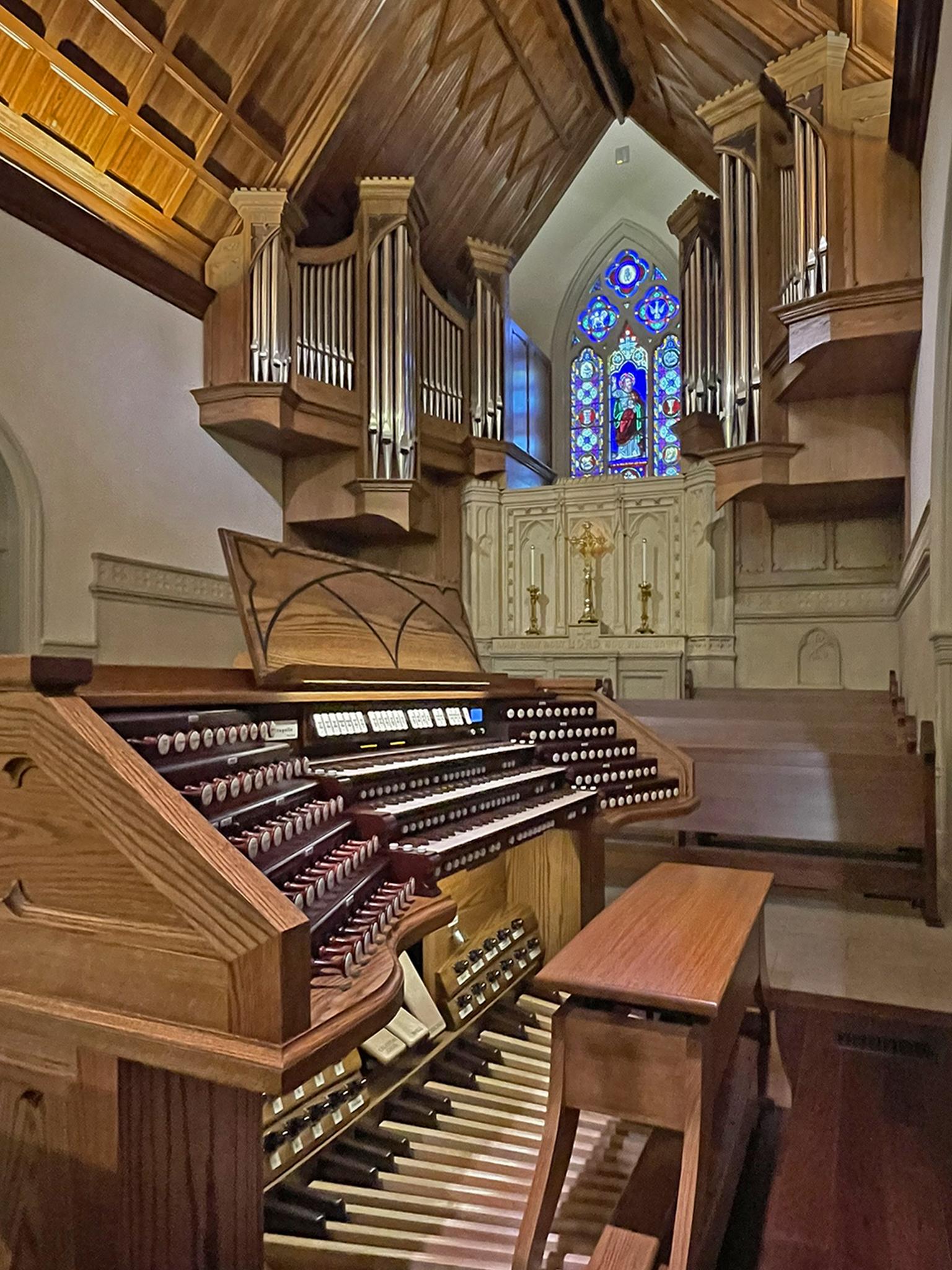
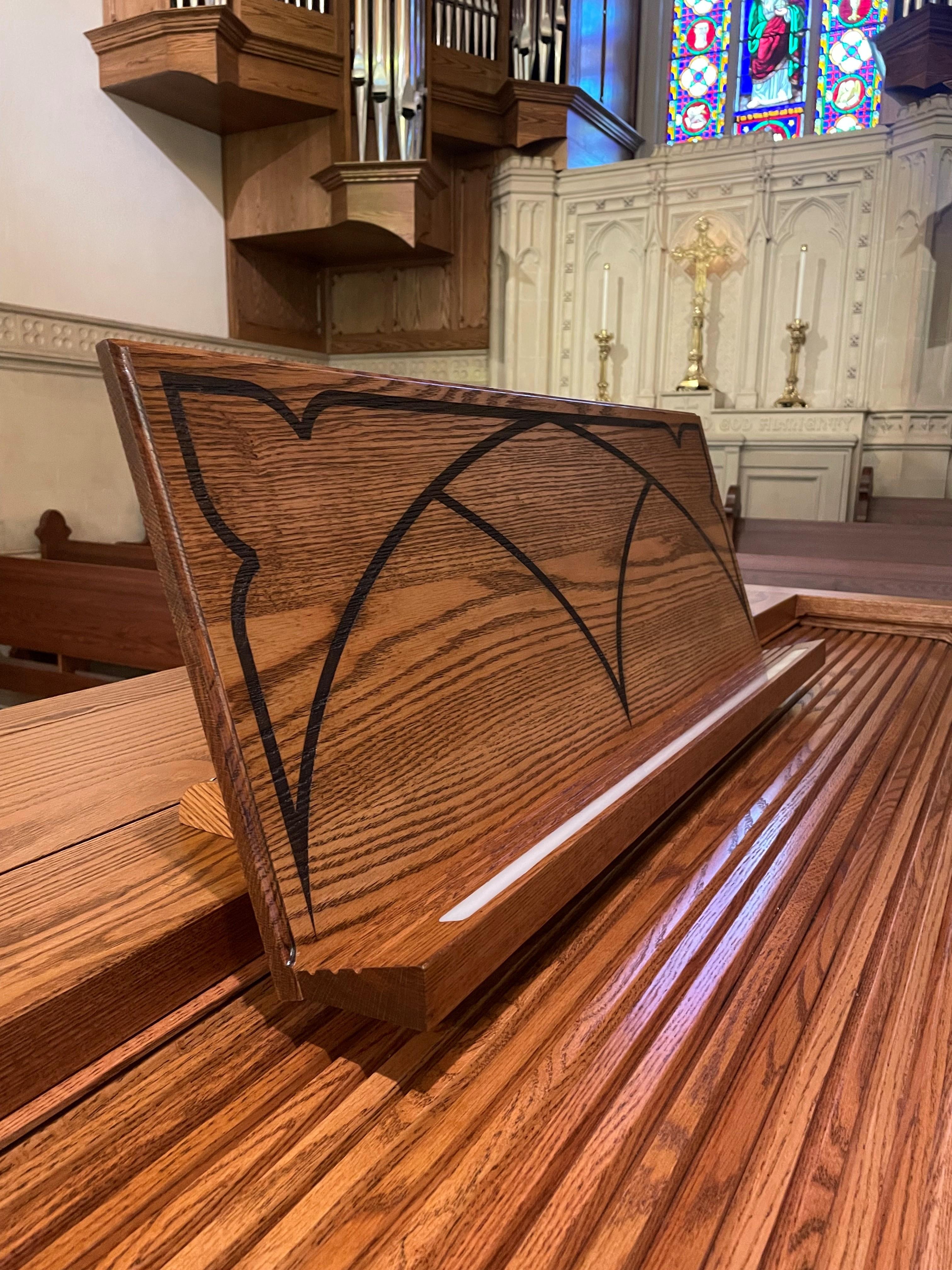
As the organist serves the dual role of both accompanist and director, our signature low-profile terraced key desk provides the required sight lines with the choristers and ancillary musicians. Given the preference to maintain a reduced overall height, managing seven divisions of stops across three claviers can be a challenge. To that end, we chose to allow the Resonance division to function along with the Great – as an extension of the Great division with the pipework of the Resonance being one scale large.
Tonally, lots of flexibility has been built in to the 42-rank stop list to create effective registrations, and a plethora of fundamental tone allows the organist to unfold layer upon layer of texture. The presence of all of the strings of the instrument on the Great clavier gives the organist the option to register solo reed combinations on the alternate claviers and a execute a diminuendo right down to a whisper.
The big reeds, Emmanuel Crown Trumpets, are available on each clavier as non-coupling stops with the option of also sounding at 16’ pitch to punctuate the melody of the hymn tune in the tenor range. Its counterpart, the Tuba Mirabilis, is expressive and can function effectively as both a chorus reed and non-coupling solo stop.
The Emmanuel Crown Trumpets, signature Peragallo chamades, are located in the upper screens of the Resonance cases on the rear wall of the church. The reeds feature Aeolian-Skinner Bombarde shallots and flared polished zinc resonators, producing a useful vehicle to carry processional and fanfare solos.
In the instruments we create, we strive to truly embody a beauty that transcends both the aural and visual as the parish’s congregants are transported closer to God through music.
We wish to express our heartfelt thanks to Reverend Robert Salamone, Reverend Katie Bradshaw, Robert Davis, and Dr. Benji Stenger for their hard work and unwavering support of the organ project. Without them and their faith in us, this project would not have been the success that it is now. It is the sincere wish of the entire Peragallo family and staff that this instrument will serve to inspire fine music for many generations at Emmanuel.
Completed Organ Photos



Organ Construction Photos