The Assumption of the Blessed Virgin Mary
The Peragallo Pipe Organ Company has served the Church of the Assumption for four generations, with John Peragallo Sr. refurbishing a 1902 Estey organ in 1952 (an instrument later damaged in a roof fire).
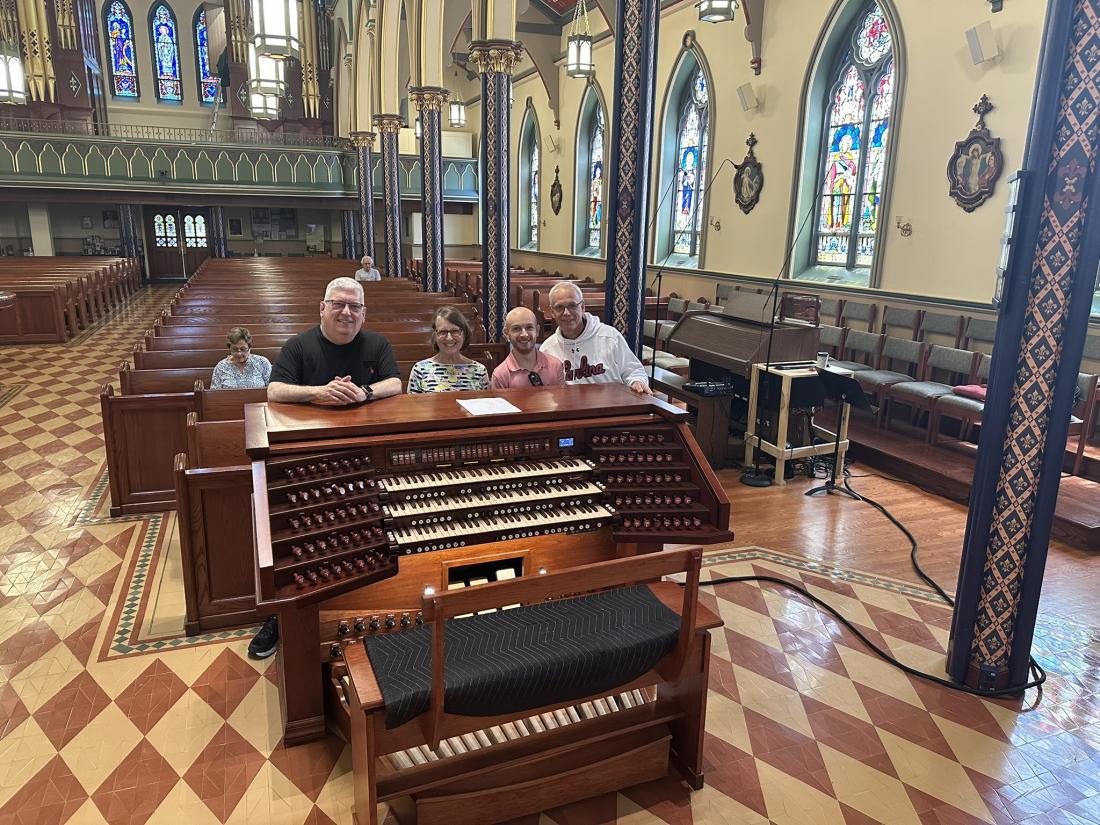
In 2024, under the direction of music director Paul Kusler, the Peragallo team was empowered to envision a new organ tailored to providing a strong foundation for parish worship and supporting the local musical community.
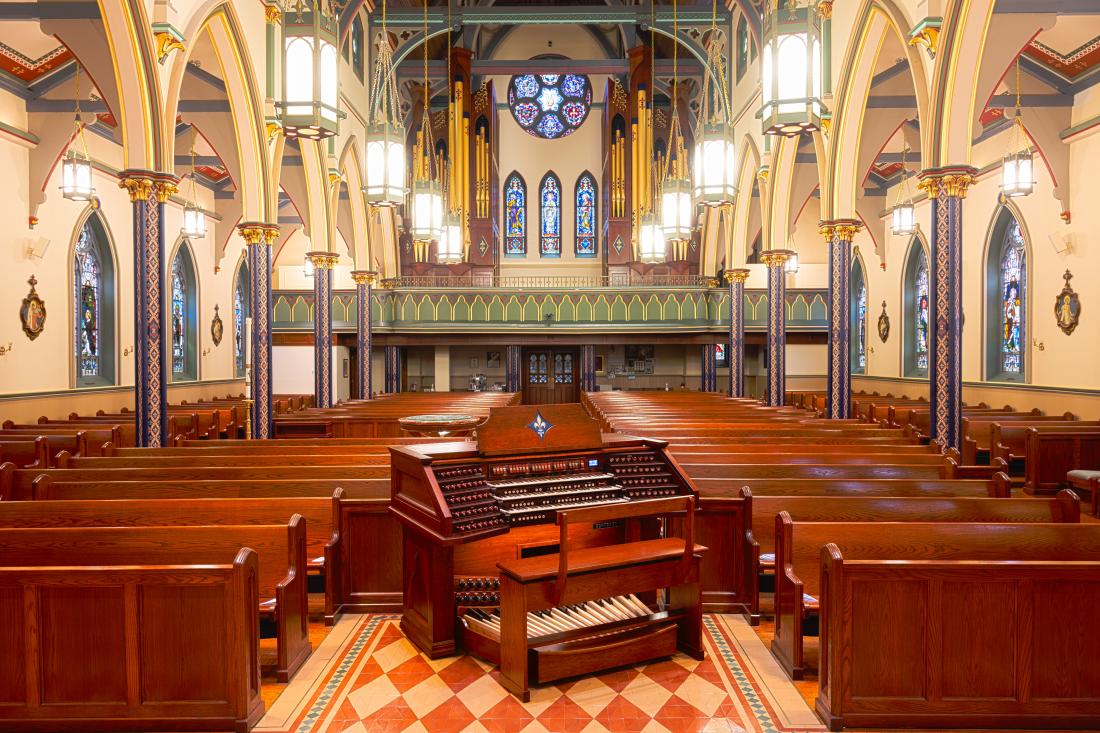
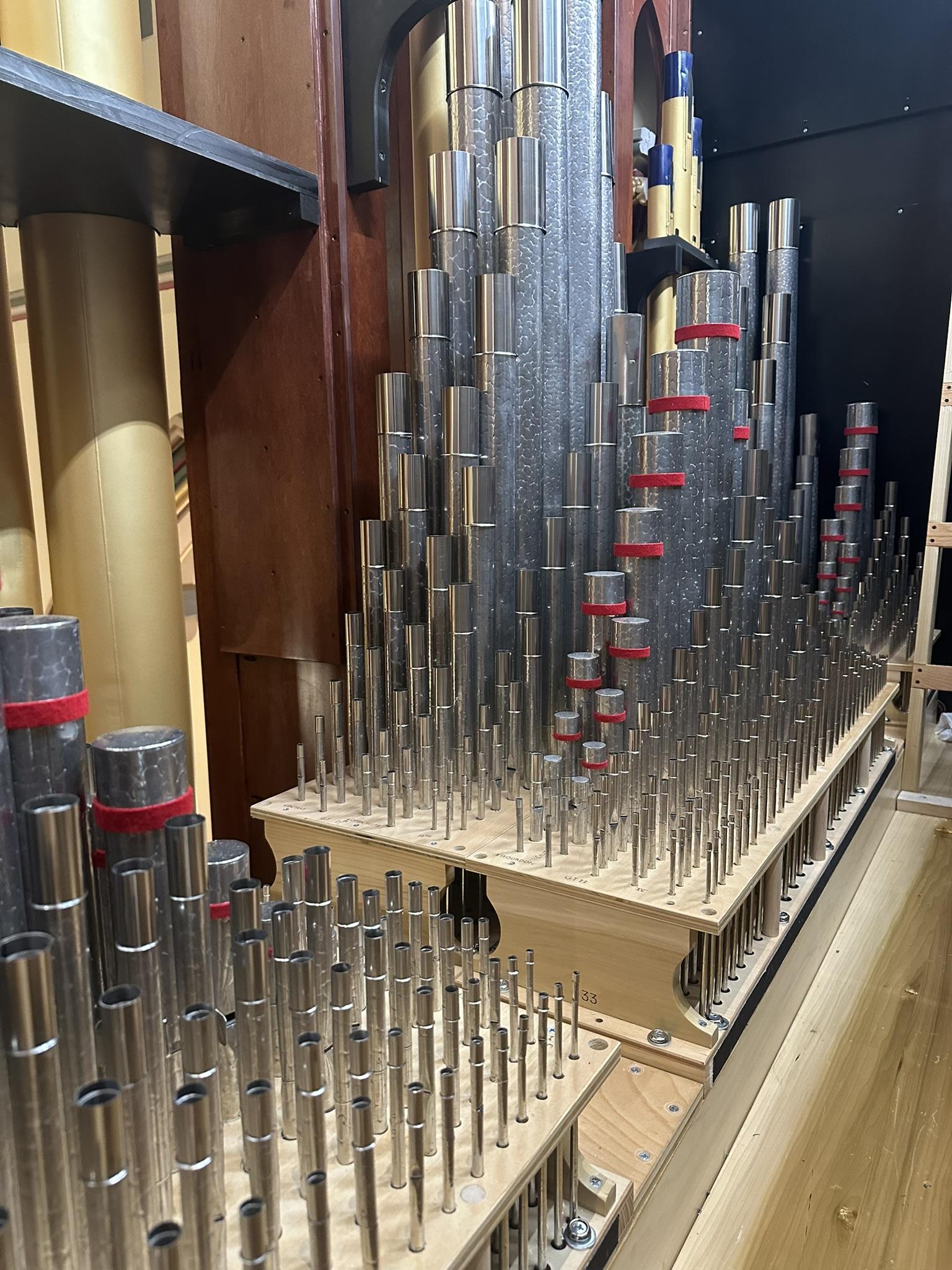
The finished instrument is “quintessential Peragallo,” with complete encased divisions offering the organist the ability to create seamless gradations of tonal color. The encased pipework produces a healthy, pleasing plenum that cascades directly into the nave.
The tonal design has been crafted to provide maximum creativity and nuance in support of the parish’s liturgical celebrations. Let’s take a closer look at exactly how that is achieved:
1. As many of you experience each week, the selection of stops in hymn accompaniment is often a direct function of the number of folks sitting in the pews. Those early masses may have a tenth of the number of congregants as the later celebrations, and the organist’s registrations must support sung worship regardless of attendance. The Great plenum includes layers of 8′ fundamental, providing a strong base for the tonal pyramid. Along the same lines, each of the manual divisions offers a uniquely scaled diapason; when coupled, they produce a gorgeous, lush foundation. This approach is in direct contrast to the “Werkprinzip” design of the former Gress-Miles instrument, which based each division on a different individual diapason pitch (16′, 8′, 4′, and 2′).
2. The mixture stops on this instrument have been carefully pitched, scaled, and tonally finished to tastefully crown the tonal pyramid of each divisional chorus. The previous organ included 19 ranks of mixtures (almost half the total rank count)— none of which was composed with a starting pitch lower than 1′. Ouch! Lots of dogs howling in the neighborhood, along with hesitation by the organist even to consider drawing them without a full church.
3. Another tool at our disposal is the Cornet decomposé, which allows the organist to pick and choose overtones. Cornets at Assumption can be composed of flutes or principals as the moment requires. Although the Cornet is part and parcel to registering French Noëls and other Baroque literature, it is equally effective in introducing and leading the psalm refrain and soloing out the tune on select hymn verses.
4. The instrument includes multiple expressive divisions, in lieu of unenclosed secondary choruses. The priority here is nuanced accompaniment. Expression chambers are ergonomically constructed to provide a full dynamic gradient, and the speakers for the digital voices are enclosed in the chambers alongside the pipes for a happy marriage of sound sourcing.
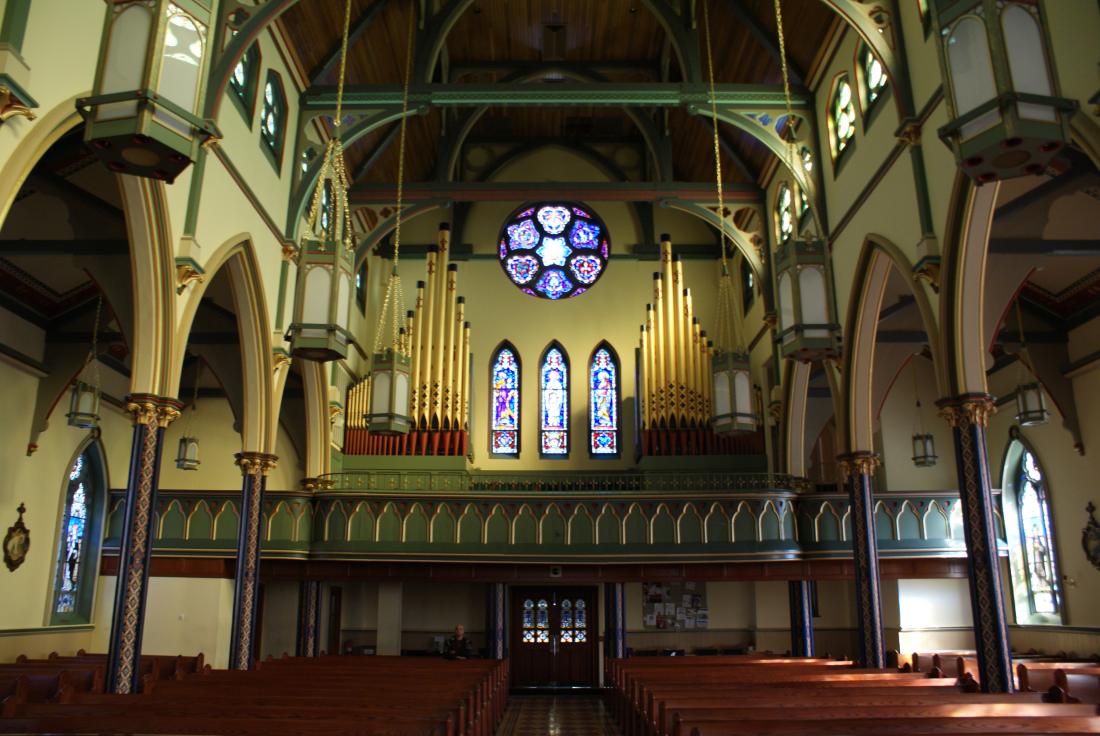
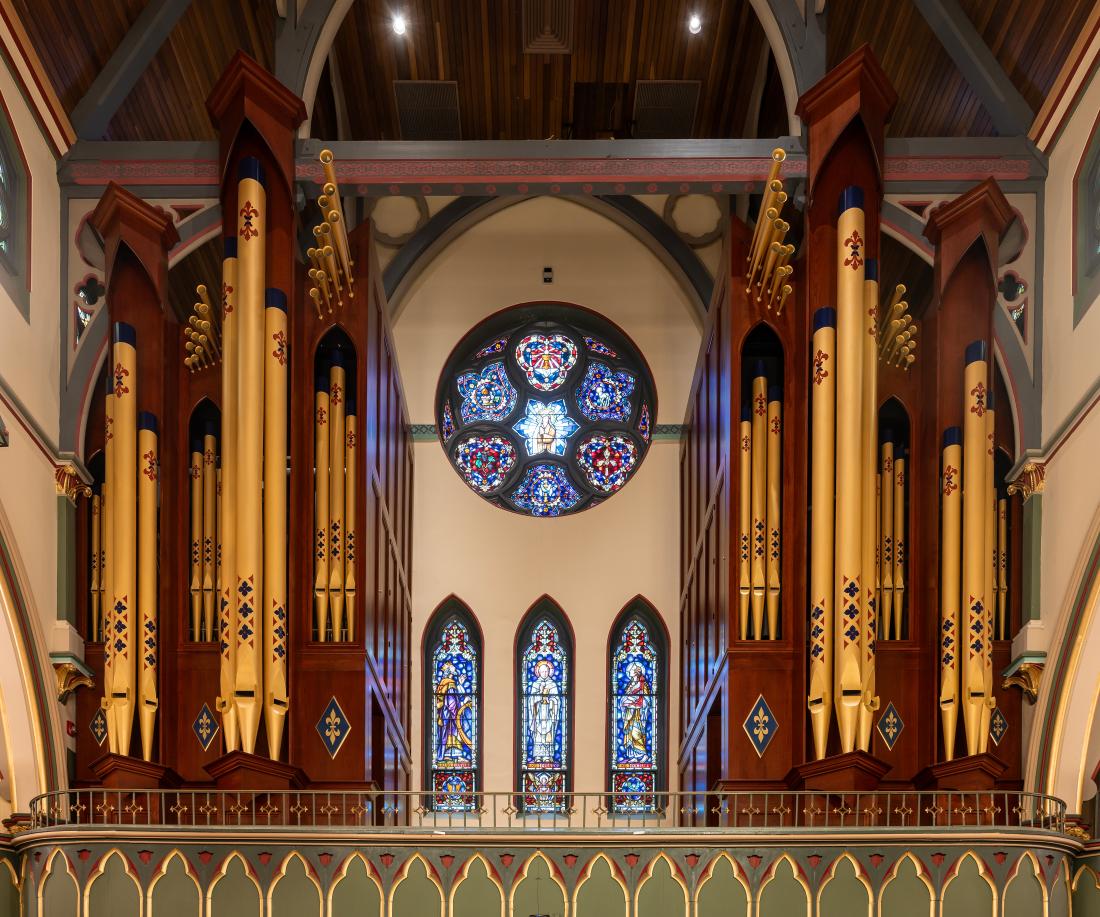
5. The visual component of the handcrafted casework stands alongside the tonal elegance of the overall sound. Casework gives the organ its acoustical character, and as Paul mentioned, the aural and visual combine for a truly inspired result. The casework, with its gorgeous cherry frames and arches housing the gloriously stenciled facade pipes, gathers and projects the tone of the instrument. And seen from the nave during the day, the case is truly stunning, with cascades of bright sunlight pouring through the rose window, illuminating the rich cherry woodwork.
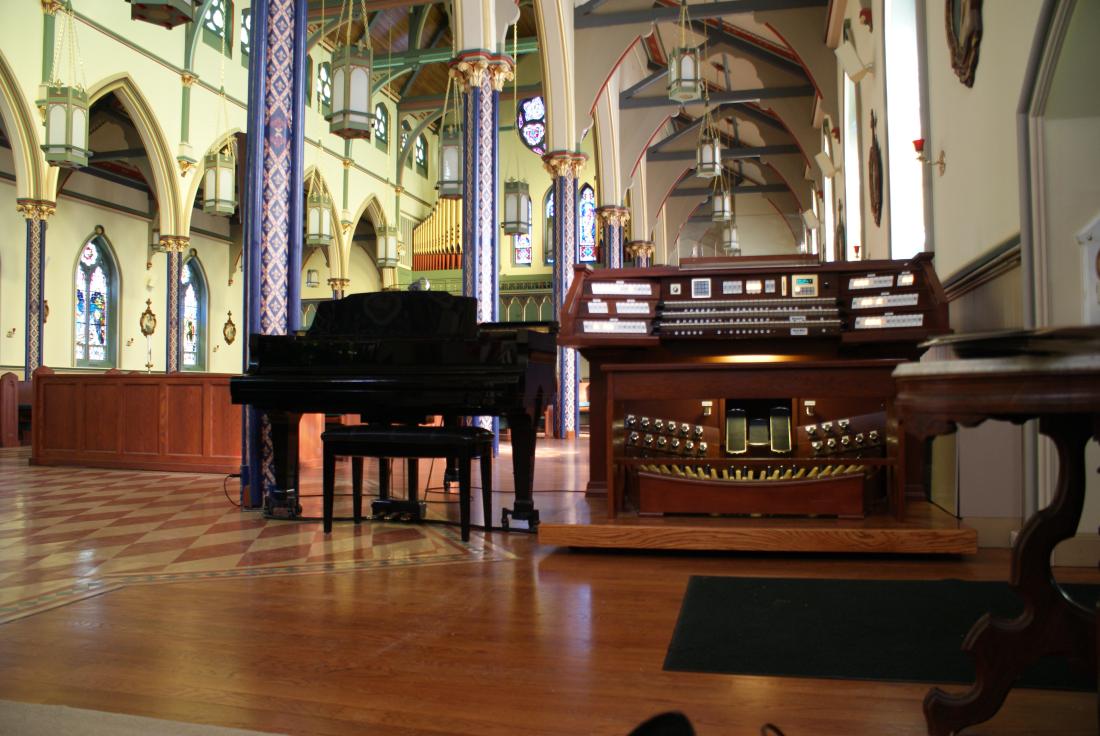
6. Technology can be a wonderful thing! The organ was limited to three manuals by the keydesk height, so floating divisions, non-coupling solo reeds, and celeste ventils greatly expand its tonal resources.
7. Finally, the selection of stops colors the ensemble portrait. The Swell 16′ Waldhorn was always an Ernie Skinner favorite, providing full gravitas to the Swell reed chorus. The organist can choose from a plethora of stylized solo voices, including the Swell Oboe and French Horn; the Choir Cremona, Cor Anglais, and Basset Horn; and the Antiphonal Fagotta. The 8′ flutes vary, with the Great capped Bourdon, the repurposed Choir Holz Gedackt, the Swell Chimney Flute, and the Antiphonal Hohl Flute each providing a distinctive color. The strings start with the full-bodied Great Violoncello and move through a broad Swell Salicional/Voix Celeste and a keener Choir Gambe Celeste to the softer hybrid Erzähler Celeste; softer yet is the Flauto Dolce Celeste. And the instrument’s assortment of percussion stops—Chimes, Harp, Glock, Tower Bells, Hand Bells, and Cymbelstern—runs the gamut.
Of course, no Peragallo organ would be complete without a chamade. The Assumption Trumpets definitely qualify as “commanders” and are perched high in the cases, speaking on 6½″ of pressure, with Willis shallots and flared resonators. If you need a bit less power, the enclosed Choir Tuba functions as fully coupling (to add to the grand plenum) or non-coupling (as a solo voice).
All in all, this organ can provide lots of fun on a Sunday morning!
We need to acknowledge the cooperation on of the staff at the church. The pastor, Rev. Msgr. John Hart, was a daily visitor during the installation process and completely supportive of the project. Talented music director Paul Kusler brought all of his experience in Catholic worship to a truly collaborative and interactive design process.
The instrument was celebrated with a tour de force dedication recital by the talented Michael Hey, with much of the Northern New Jersey organ community in attendance. It is our sincere hope that Opus 784 will musically inspire the faith life of this vibrant community for many future generations.
Completed Organ Photos

Organ Construction Photos